Health stories / Plant protein
How can you assess protein quality? A simple guide to the scores
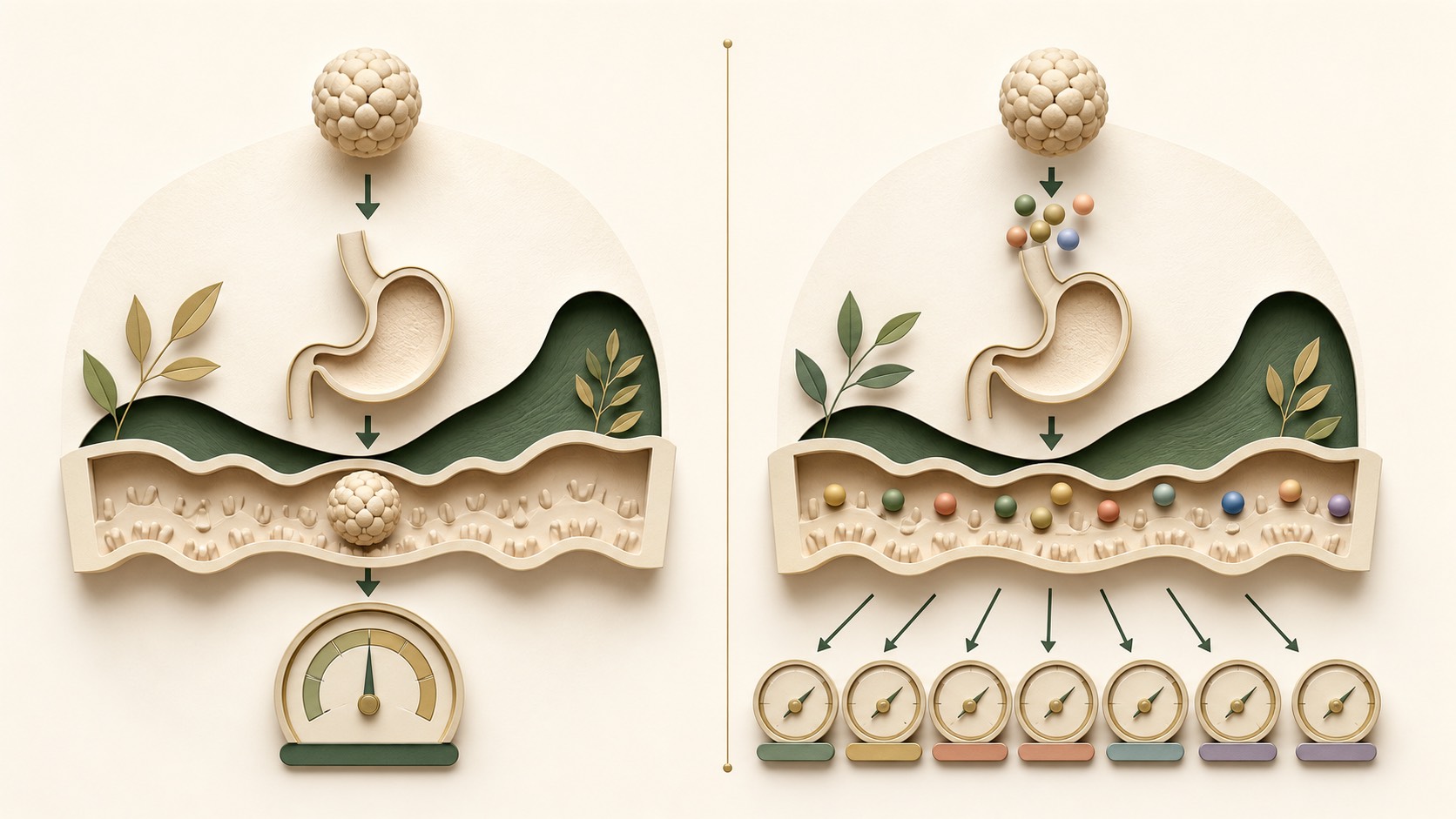
How do the two protein-quality scores differ?
PDCAAS and DIAAS are two ways to score protein quality. Both consider protein building blocks the body needs from food, called essential amino acids, together with digestibility. Their measurements and calculations differ, like two different grading systems.
PDCAAS uses overall protein digestibility assessed from faeces. DIAAS looks at individual essential amino acids, using measurements at the end of the small intestine before material enters the large intestine.
For a meaningful comparison, use scores from the same method and check that the reference amino acid requirements and sample information are consistent.
- Scoring system name
- Where digestibility is assessed
- Whether digestibility is measured overall or for each amino acid
- The reference amino acid requirements used for comparison
- Sample type and form
References: NCBI Bookshelf · PubMed Central
Start with the amino acid lowest relative to the reference
Both methods look at how much of each essential amino acid the tested protein contains relative to the reference requirement, then identify the lowest proportion.
The one with the lowest proportion is called the first-limiting amino acid. It helps determine the quality score of the protein being tested.
“Limiting” does not mean the food contains none of that amino acid. It means its proportion is lowest relative to the specified reference.
- Check the amount of each essential amino acid
- Check the reference requirements used for comparison
- Compare each amino acid’s proportion with the reference
- Select the lowest value
- Digestibility data from the relevant method are therefore included in the calculation.
Read What is protein? to understand what protein quantity, amino acids and digestibility each tell you.
References: PubMed Central · NCBI Bookshelf
PDCAAS: overall digestibility, with scores capped at 100%
PDCAAS is an amino acid score adjusted for protein digestibility. Its full name is Protein Digestibility-Corrected Amino Acid Score. It starts with the essential amino acid lowest relative to the reference, then adjusts the score using digestibility data.
This method estimates overall protein digestibility from faeces and applies one digestibility value to the protein as a whole, rather than to each amino acid separately.
If the calculated score exceeds 1.0 or 100%, PDCAAS reports it as 1.0 or 100%. The reported score therefore does not show differences above that level.
- Start with the essential amino acid lowest relative to the reference
- Adjusted using overall protein digestibility
- Assessed from faeces
- Applies one digestibility value to all the protein.
- Caps scores at 100%.
References: NCBI Bookshelf · PubMed Central
DIAAS: assess digestibility for each amino acid
DIAAS scores the digestible essential amino acids. Its full name is Digestible Indispensable Amino Acid Score. It uses separate digestibility values for each essential amino acid, measured at the end of the small intestine.
The amount of each amino acid is then compared with its reference requirement. The lowest proportion becomes the protein score for the sample being tested.
For individual proteins, DIAAS can show scores above 100%, so amounts above the reference remain visible. The score does not tell you how many grams of protein a serving provides.
- Uses digestibility measured at the end of the small intestine.
- Separate values for each essential amino acid
- Use the lowest ratio as the score
- Retains individual protein scores above 100%.
- Where relevant, also consider lysine that has not been chemically modified (reactive lysine)
References: PubMed Central · NCBI Bookshelf
Read a good score alongside the quantity.
The score describes protein quality according to the method used. Protein per serving tells you how many grams you receive. Read both when making a choice.
- Compare scores within the same method.
- Use the same reference pattern.
- Use comparable samples and processes.
- Read amounts per serving separately from scores
- Use the score to describe protein quality by that method, not to judge the whole food’s value
Read more about food sources in Plant protein and animal protein and use scores from samples that match the foods or ingredients you are comparing.
References: PubMed Central · PubMed Central · NCBI Bookshelf
Compare scores, then choose a convenient format.
When you see a score, first check whether the method is PDCAAS or DIAAS. Then look for the measurement method, comparison reference, lowest-proportion amino acid and full details of the tested sample.
- Look for PDCAAS or DIAAS so you compare scores from the same system.
- Check the age group and amino acid requirements to see whom the score refers to.
- Check where digestibility was measured and whether it uses one overall value or a value for each amino acid.
- Check the food form and processing method so that the samples are comparable.
- Check the amount per serving to see how many grams of protein you would get.
If you are exploring different product formats, read Protein capsules and protein powder then distinguish per-serving information from the score
Use scores that clearly identify the method and sample. For further comparisons, ask the seller directly for details.
Scores help explain protein quality, while the format helps you choose a convenient way to take it. For grain and soy protein in capsules, visit the Pro Cap product page for ingredients, test results and pack options.
References: NCBI Bookshelf · PubMed Central · PubMed Central
Frequently asked questions
- Are PDCAAS 100% and DIAAS 100% equivalent?
- The numbers match, but their meaning may not. The methods assess digestibility differently. PDCAAS caps reported scores at 100%, while DIAAS for individual proteins can show higher values.
- Does a high score mean a serving contains a lot of protein?
- Not necessarily. The score reflects amino acid proportions relative to a reference, adjusted for digestibility. Protein or amino acid amounts per serving are separate, so also check how many grams a serving provides.
- Can total protein alone be used to calculate these two scores?
- The total protein figure alone is not enough. You also need amounts of individual essential amino acids, the reference requirements and digestibility data that matches the method.