Health stories / Protein & skin
Protein and skin: an essential building material for collagen
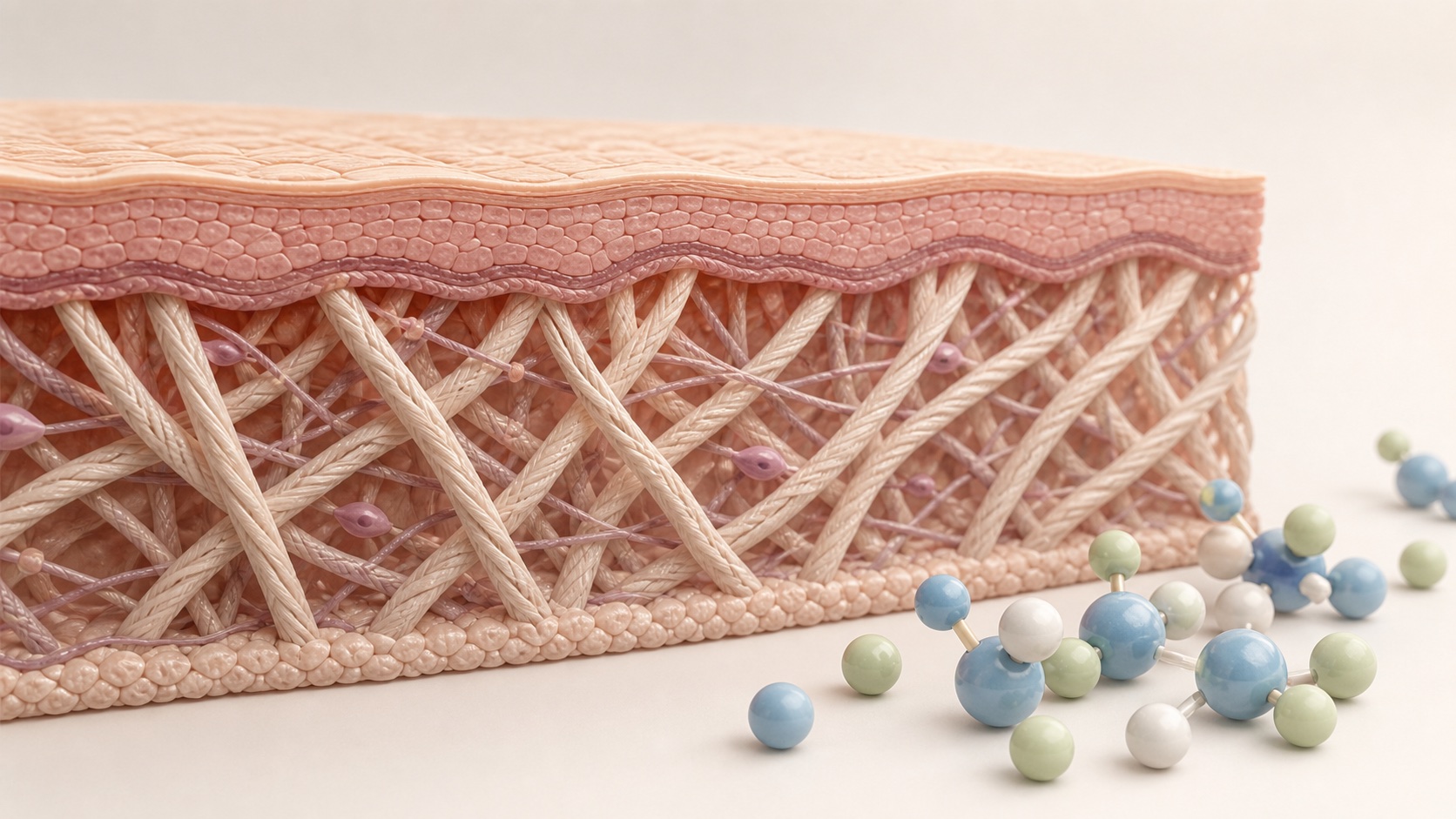
Collagen: the skin's structure starts with protein
Collagen, which supports the skin, is a fibrous protein. Think of a network that gives tissues strength. Skin care therefore includes nutrition alongside care from the outside.
Getting enough protein and eating a varied diet provides materials the body can use to build and repair cells each day.
References: Collagen review · MedlinePlus: dietary protein · MedlinePlus: protein functions
From protein in your meals to the building blocks of skin
Amino acids are the small units that make up protein. Think of them as building blocks. When we eat protein-containing foods, digestion breaks the protein into smaller units before the body uses them to make its own proteins, including collagen.
- Obtain building blocks — Include protein sources such as eggs, fish, meat, tofu or beans in your meals.
- Broken into small units — Dietary proteins are digested into amino acids that the body can absorb and use.
- Build according to need — Cells assemble amino acids into many proteins. The body allocates building blocks according to the work of different tissues.
Eating protein supplies building materials for the body as a whole; it does not send all dietary protein directly to the skin.
References: MedlinePlus: dietary protein · MedlinePlus: protein functions · Collagen review
Protein + vitamin C: preparing meals for collagen formation
Protein provides amino acids as building material, while vitamin C is needed in the process of making collagen. Try to include foods from both groups each day.
- Supply building blocks with protein — choose protein sources you enjoy and eat enough for your body's needs.
- Add vitamin C to the toolkit — include vegetables or fruit such as oranges, kiwi, sweet peppers or broccoli to obtain vitamin C from food.
Start with fish or tofu and vegetables, followed by an orange or kiwi. Rotate dishes you enjoy to make healthy eating sustainable.
Read more about The functions of protein and Daily protein intake to plan meals that suit you
References: NIH ODS: vitamin C · MedlinePlus: dietary protein
Pro Cap: a rice and grain formula in a simple format
For a simple addition to your after-meal routine, Pro Cap from GENISÉ offers rice and grain ingredients in convenient capsules, with no mixing needed.
- Know the ingredients — Brown rice, jasmine rice and glutinous rice combined with corn and soybeans in one formula.
- ALS protein analysis — the submitted Pro Cap sample contained 56.6 grams of protein per 100 grams. Read the report using the link below.
- Fits a minimalist lifestyle — no shaker or measuring spoon. Carry it in its original packaging and follow the label directions at home or while travelling.
Discover Pro Cap formula and view the ALS protein analysis
Use as a supplement according to the label while getting enough protein, vegetables and fruit. Protein's role in collagen is nutritional knowledge, not a test showing that Pro Cap increases collagen or reduces wrinkles.
References: Siam Bio Best — Pro Cap formula · ALS — Pro Cap analysis · MedlinePlus: dietary protein · NIH ODS: vitamin C
Keep nutrition consistent, starting with a meal you can manage.
Choose protein sources you enjoy, add vitamin C-rich fruit and vegetables, and vary your diet so supplying the body's building blocks becomes part of your day.
Pro Cap directions are 2 capsules after meals, 3 times daily. Follow the label on the product received. The formula contains soybeans and a gelatin shell. Read Ingredients and product details to suit your dietary restrictions
Reference: Siam Bio Best — Pro Cap formula · MedlinePlus: dietary protein · NIH ODS: vitamin C
Frequently asked questions
- How is collagen related to protein?
- Collagen is a fibrous protein found in different tissues, including the skin. The body uses small protein units called amino acids as the material for making collagen.
- Why do we also need vitamin C?
- Vitamin C is needed in the process of making collagen. Aim for enough protein alongside foods containing vitamin C, such as oranges, kiwifruit, sweet peppers, and broccoli.
- How is Pro Cap convenient?
- Capsules made from three types of rice, combined with corn and soybeans. No measuring or mixing. Take after meals as directed, alongside adequate, varied main meals.