Health stories / Body basics
Fat and protein: why do cells need both?
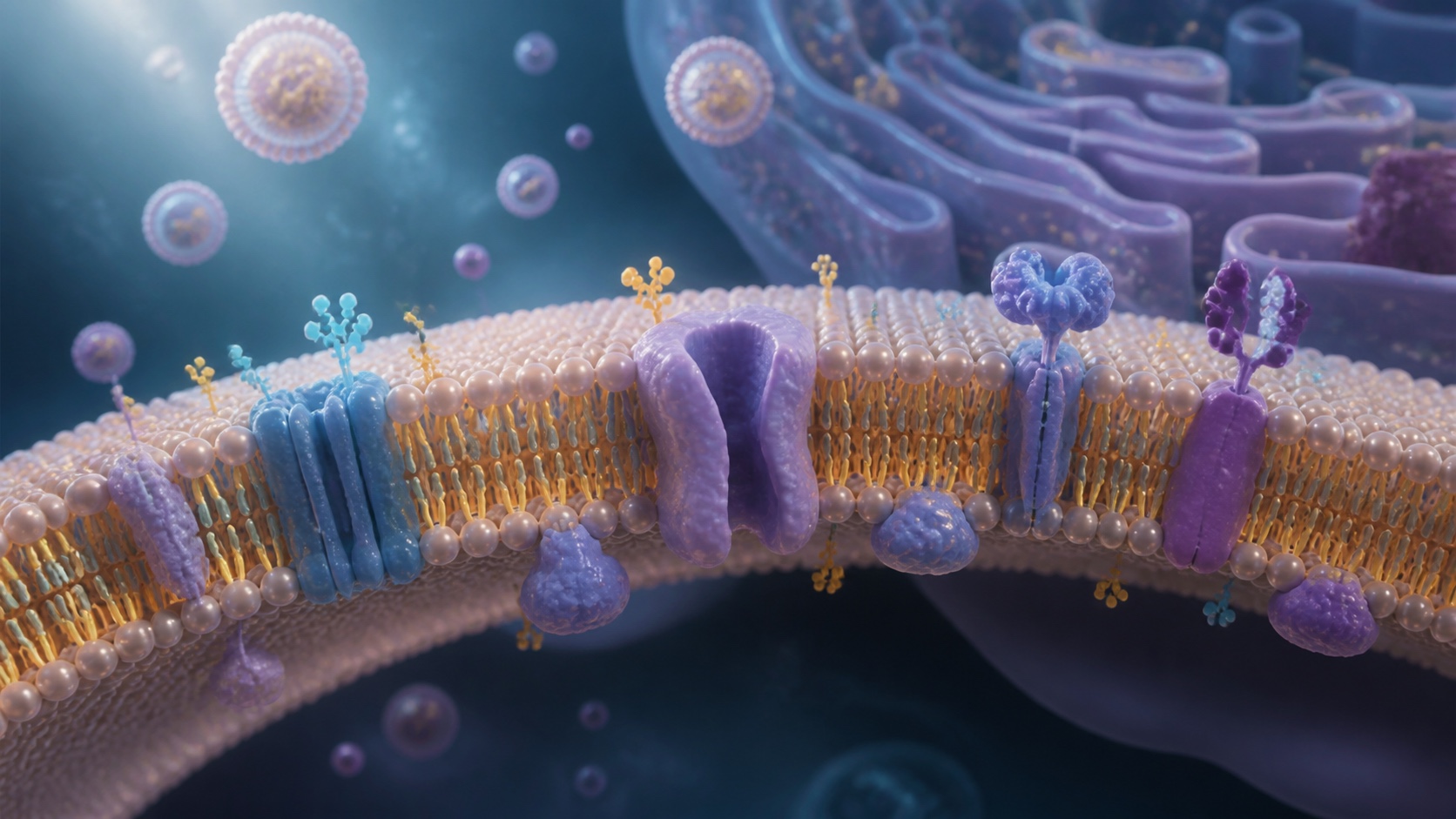
A cell is like a house with walls and doors.
Think of a cell as a house. Fats and fat-like substances called lipids form the boundary between inside and outside. Proteins act like doors, message receivers and the team working in the house.
Food supplies starting materials. The body digests protein and fat first, then cells build and organise the components they need through their own systems.
- Food enters digestion
- Cells produce specific proteins through their own systems.
- Cells make and move lipids through several routes
- Membranes form through organisation within cells
A cell membrane is not a solid wall. It is a dynamic boundary that lets the cell exchange substances, receive signals and interact with its surroundings.
References: Sinauer Associates · Sinauer Associates · Essays in Biochemistry · Annual Review of Biophysics
Fats are part of cell membranes
A type of lipid called a phospholipid is an important part of cell membranes. Its head mixes well with water, while its tails do not. In fluid, the heads face outwards and the tails stay inside.
This arrangement forms two layers of lipids, called a bilayer. It separates the inside of a cell from the outside and also forms the framework of membranes within the cell.
This boundary contains a mix of lipids, including phospholipids, sphingolipids and cholesterol. Their proportions vary between locations.
- Small working structures inside the cell, called organelles, have different compositions
- The two lipid layers may have different compositions
- Different cell types have different compositions.
- The conditions around a cell influence the makeup of its membrane.
References: Sinauer Associates · Essays in Biochemistry
Building blocks move through the cell's factories
Inside a cell, different structures work like factories that make and distribute lipids. The endoplasmic reticulum, or ER, produces many membrane lipids. Some undergo further processing in other cell structures, such as the Golgi apparatus or mitochondria.
Once made, lipids travel to where the cell needs them. Some move in tiny transport sacs called vesicles. Others pass through contact points between cell structures or are carried by specialised proteins.
- Make precursors or take substances into the cell
- They are modified by enzymes, which help reactions take place in cells
- Sorting by type and destination
- Transport through the appropriate pathway for that lipid
Lipid-transporting proteins are specialist teams made by cells. Dietary proteins are digested into smaller units before entering the body's pathways for use.
References: Essays in Biochemistry · Sinauer Associates · National Institute of Diabetes and Digestive and Kidney Diseases
Proteins are the doors and working teams.
Many membrane proteins begin to form at ribosomes, the cell’s protein-building machinery. Ribosomes attached to the ER give it a rough appearance and help feed proteins into the ER membrane or interior as they are being made.
New proteins are folded into shape, checked for quality and modified. They then pass through the Golgi to the outer cell membrane or their destination inside the cell.
- Some form channels or move substances across the membrane (transporters)
- Some receive signals for the cell (receptors)
- Some are enzymes that help reactions take place
- Some anchor or connect to the cell’s internal support framework (cytoskeleton)
Lipids surrounding proteins may be linked to the shape, grouping and function of certain proteins, through direct interactions and the properties of the lipid bilayer.
Follow the building blocks' journey at What is protein? to see where food comes in before cells make proteins for specific tasks
References: Sinauer Associates · Annual Review of Biophysics · Sinauer Associates · Essays in Biochemistry · National Institute of Diabetes and Digestive and Kidney Diseases
From the blood into cellular systems
Think of the journey in two stages. First, small transport particles called lipoproteins carry lipids through the liquid part of the blood, or plasma. Once the lipids reach a cell, its internal systems take them in, sort them and send them where needed.
Receptors on a cell help it take up lipids from lipoproteins. The lipids are then separated, moved and chemically processed before joining those already present in the cell.
Read about transport in blood at How do lipoproteins differ from dietary protein? then compare with processes inside cells
Cholesterol forms part of membranes and is a precursor to steroid hormones. Its destination depends on the cell's uptake, sorting and enzyme systems.
Explore another destination at What hormones are made from to see how different building blocks enter the body through different pathways
References: Sinauer Associates · Essays in Biochemistry · MDText.com, Inc.
From cell science to your choices
Remember the house analogy: lipids form the walls, proteins are the doors and working teams, and the cell builds, sorts and sends each part to the right place.
- Two layers of lipids form the membrane’s basic structure
- Membrane proteins have several roles.
- The cell’s production and delivery structures, including the ER and Golgi, help manage internal routes
- Transport in the blood brings materials to cells; systems inside each cell organise their use.
Learning about cells helps explain nutrients' roles. To explore GENISÉ products, see Avocado Plus or Pro Cap and choose your preferred pack.
References: Sinauer Associates · Sinauer Associates · Essays in Biochemistry · National Institute of Diabetes and Digestive and Kidney Diseases · Annual Review of Biophysics
Frequently asked questions
- What makes up a human cell membrane?
- The membrane has a basic structure of two lipid layers, with different proteins embedded in or attached to it. Its composition and arrangement can vary with the location and condition of the cell.
- Does dietary protein turn directly into membrane protein?
- Dietary protein is broken down first. Membrane proteins are specific proteins that cells make, fold, check and transport through internal pathways.
- Does eating protein and fat together increase membrane production?
- Membranes are built and organised through several intracellular steps. Eating nutrients together concerns the meal; building membranes is the cell's job.
References
- NIDDK — Your Digestive System & How it Works
- NCBI Bookshelf — Cell Membranes
- NCBI Bookshelf — The Endoplasmic Reticulum
- Essays in Biochemistry — Mammalian lipids: structure, synthesis and function
- Annual Review of Biophysics — Lipid–Protein Interactions in Plasma Membrane Organization and Function
- Endotext — Introduction to Lipids and Lipoproteins